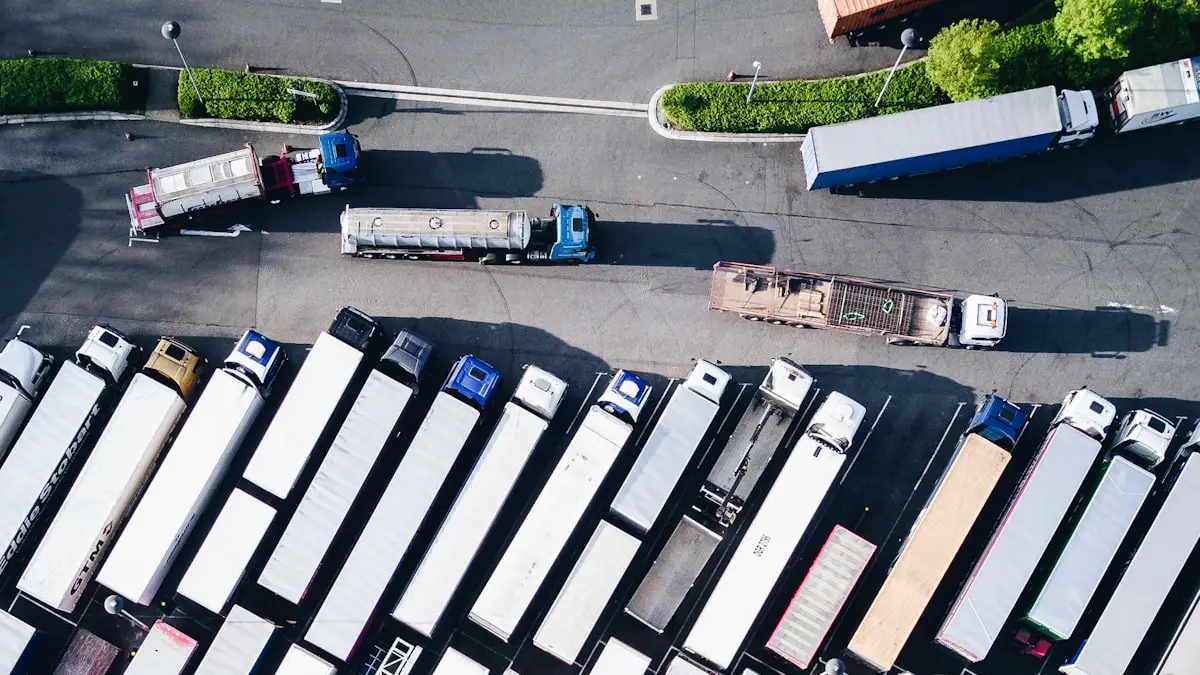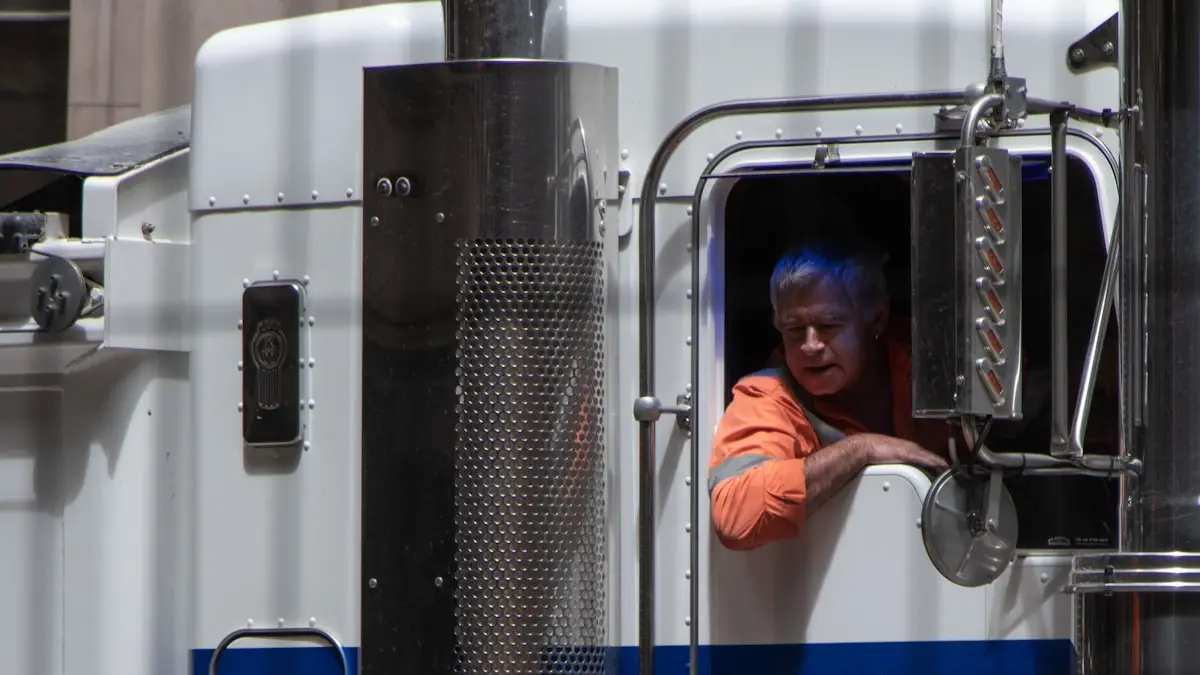
Before the walk: last night's DVIR
Start with paper, or the app. If a post-trip inspection report was filed on this truck with a defect noted, the rule requires the defect be repaired or signed off as not safety-affecting before the truck moves. Skipping this review is one of the easiest violations to write up in an audit, because the record shows exactly who ignored what.
Electronic DVIRs make this a ten-second check: open the vehicle, read yesterday's report, confirm the repair certification. If your fleet still runs paper books, the previous report should be in the truck, and reading it is step zero.
A noted defect without a repair sign-off means the truck doesn't move. That decision was made yesterday; the pre-trip just enforces it.
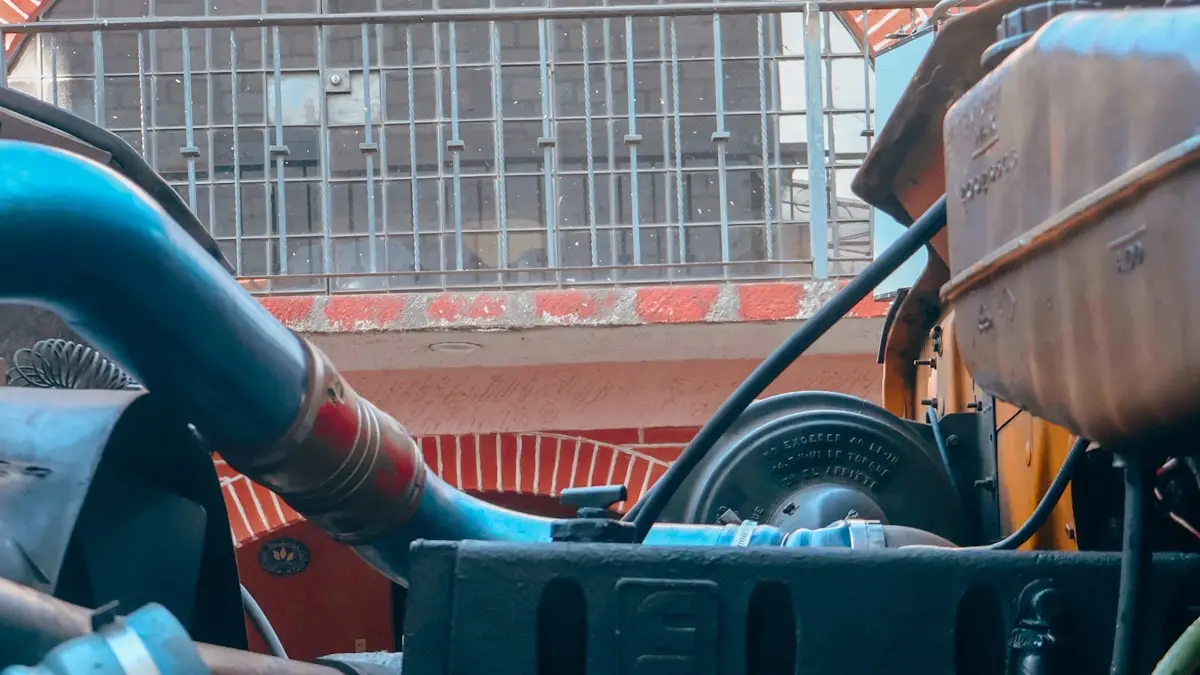
Engine compartment, wheels chocked, hood up
- Fluids: engine oil level, coolant level in the reservoir, power steering fluid, and a glance under the truck for fresh drips that weren't there yesterday.
- Belts and hoses: no fraying, cracking, or glazing on belts; hoses firm, not spongy, with no seepage at clamps.
- Steering components: steering box secure and not leaking, linkage joints snug, no play you can produce by hand.
- Front suspension and brakes: leaf springs intact and aligned, shock absorbers dry, brake chamber and hoses secure, pads or linings with visible thickness and no contamination.
- Front wheel: lug nuts all present with no rust trails or shiny threads that signal movement, hub oil window full and clear, valve stem capped, tread deep and even, sidewall clean of cuts and bulges.
The lap: lights, tank area, coupling, trailer
Turn on headlights and four-ways before you start the lap, so every fixture can be checked as you pass it. Lighting defects are perennially the most-cited violation category, and every one of them is visible from the ground.
- Lights and reflectors at every corner: headlights both beams, turn signals, marker lights, reflective tape unbroken and clean.
- Fuel area: cap tight and tethered, no seepage, tank straps secure, steps and catwalk clear of debris and grease.
- Frame and driveline: no visible cracks in frame rails, no loose crossmembers, exhaust secure with no soot trails marking a leak.
- Coupling, the area that fails quietly: fifth wheel jaws locked around the kingpin, no gap between fifth wheel plate and trailer apron, release handle seated, kingpin not shiny from movement, glad hands seated with dry, uncracked seals, electrical line locked in.
- Trailer: landing gear fully raised with the handle secured, tandem release pins seated, every tire and wheel checked exactly like the tractor's, mud flaps attached, door hinges and latches working, and the trailer ABS light cycling correctly.
- Cargo securement: load blocked or braced, straps or chains tensioned with legal working-load limits for the freight, no shifting risk visible from the doors. Open-deck freight gets a re-check within the first 50 miles.
In the cab: gauges, air, and the brake tests
The cab check is short until you reach the air system, and then it deserves patience, because brake violations are the ones that put trucks out of service on the spot.
- Basics: seat belt latches firmly, horn works, wipers and washers work, mirrors and glass clean and uncracked, all gauges reading normal after start.
- Emergency kit: fire extinguisher charged and secured, spare fuses if your truck uses them, three reflective triangles present. Inspectors do open the box.
- In-cab paperwork: registration, insurance, medical card as applicable, and the ELD instruction sheet plus malfunction procedure and blank paper logs the mandate requires in the cab.
- Air brake test, the three-part sequence: with full pressure, engine off, brakes released, watch for leakage no worse than about 2 psi in a minute for a combination unit; then with the service brake applied and held, no worse than about 3 to 4 psi in a minute; fan the brakes down and confirm the low-air warning triggers before 60 psi; keep fanning and confirm the tractor protection valve and spring brakes pop between roughly 20 and 45 psi.
- Service brake check: pull forward at walking speed and apply the brakes once, feeling for pulling or delay.
If the low-air warning never sounds during the fan-down, the truck is not roadworthy. That is precisely the failure the test exists to catch before a hill does.
Make it stick without making it theater
The failure mode of pre-trips isn't drivers who don't know the list, it's the fifteenth Tuesday in a row where nothing has ever been wrong and the walk quietly becomes a glance. Two things keep the habit real.
First, the same order every time, front to back, so the sequence itself is the memory. Second, make findings cheap to report. A driver who can photograph a chafed airline and file the defect from a phone in thirty seconds will report it; one who has to find a supervisor and a form before a 6 a.m. dispatch will convince themselves it can wait a day. Electronic DVIRs earn their keep on exactly that morning, and they timestamp the fleet's proof that inspections actually happen.