The exoneration case
A large share of commercial vehicle collisions are not the truck's fault, and without video, fault gets decided by whoever tells the better story. The truck is bigger, the driver is a professional, and juries start from an assumption that isn't friendly.
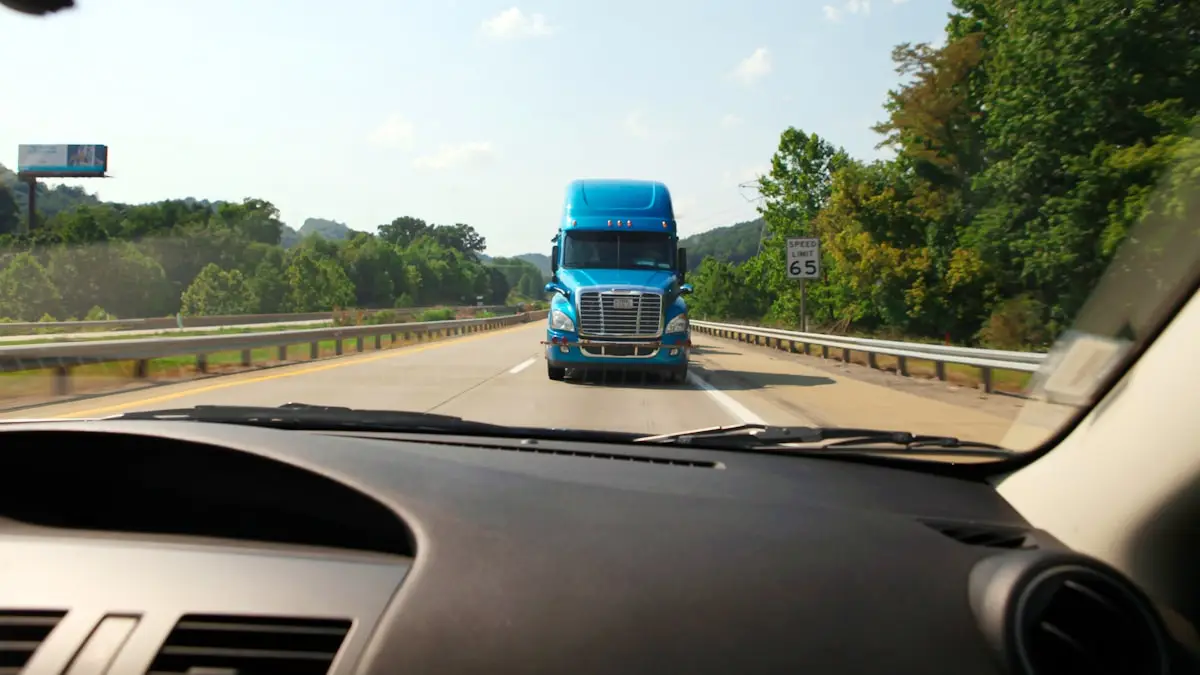
Forward-facing footage collapses that argument. A clip showing a passenger vehicle merging into the lane and braking ends most claims before they become litigation. This is the clearest financial case for cameras, and it shows up immediately rather than over a policy cycle.
The cheapest claim is the one that never gets filed, because the other party's attorney watched the video first.
Nuclear verdicts and the discovery problem
Verdicts against carriers have grown faster than inflation for a decade, and plaintiff strategy has shifted from arguing the crash to arguing the company. Did you know this driver was risky? What did you do about it?
This cuts both ways for camera programs. A fleet that captures risky behavior and coaches it has a documented answer. A fleet that captures risky behavior and ignores it has handed the plaintiff a file. Cameras without a coaching workflow are worse than no cameras at all, and that is worth being blunt about before you buy any.
Behavior change is where the recurring savings live
Exoneration saves money on individual claims. Behavior change reduces how many claims there are, and that is what moves a loss ratio over a policy period.
The mechanism is feedback speed rather than surveillance. A driver who gets a short clip of their own hard brake within a day of it happening connects the event to the behavior. The same feedback in a quarterly review connects to nothing. Fleets that see real frequency reductions are almost always the ones that closed the loop from event to conversation inside 48 hours.
- Following distance, the behavior most correlated with rear-end collisions and the most coachable.
- Distraction and phone use, which drives the worst outcomes when it does produce a crash.
- Hard braking and harsh cornering, useful mostly as a leading indicator rather than a standalone offence.
- Seatbelt use. Trivially detectable, non-negotiable, and a factor both in injury severity and in how a jury reads a case.
Speed of feedback beats volume of feedback. One clip reviewed tomorrow outperforms fifty reviewed next quarter.
What underwriters ask for
Having cameras is table stakes now. What differentiates a renewal conversation is being able to describe the program.
- Coverage. What percentage of the fleet is equipped, and whether it includes inward-facing cameras.
- Event review rate. How many flagged events get looked at by a human.
- Coaching cadence. How fast a flagged event becomes a documented conversation.
- Trend data. A chart showing events per thousand miles going down over 12 months is the most persuasive artifact you can bring.
- Retention policy. How long footage is kept and how quickly it can be produced.
The driver conversation you have to get right
Inward-facing cameras are where camera programs succeed or fail culturally. Drivers who believe the camera exists to catch them will fight it, disable it, or leave. Drivers who believe it exists to protect them will use it.
The difference sits entirely in how the program is run. Announce it before installing. Explain exactly what triggers a recording and what doesn't. Share exoneration wins publicly. The first time a camera clears a driver of a claim, the whole fleet hears about it and the argument is over. And never use footage for anything you didn't say you'd use it for.
- Event-triggered recording rather than continuous surveillance of the cab.
- Written policy on who can view footage and under what circumstances.
- Coaching framed as coaching, with a path to improvement, rather than discipline by default.
- Recognition for improvement, not only flags for failure.
Buying advice
The camera market has converged on similar hardware, so the differences that matter sit downstream of the lens.
- Detection accuracy at the edge. False positives are the fastest way to kill a program, because reviewers stop reviewing.
- How quickly footage is retrievable after an incident. Hours works. Days doesn't.
- Whether the coaching workflow is built in, or whether you'll be exporting clips into email.
- Integration with your ELD and telematics, so an event carries the log context around it.
- Storage and cellular costs, which are frequently where the real total cost hides.